
Compliance: Don’t Lose the Race Before It’s Begun


“How do you define compliance?” This was the first question posed to a panel of compliance professionals at APMP’s Bid & Proposal Con in October. The session, titled “Don’t Make Me Get Out My Red Pen,” was moderated by Betsy Blakney, CPP APMP Fellow, director of business intelligence and BD operations at CACI.
The panelists were three of Blakney’s CACI colleagues: Shanitra Davis-Howard, CF APMP, manager, proposal coordination and compliance lead; Kristin Dufrene, CPP APMP Fellow, executive director, capture; and Kathy Solli-Ziegler, CF APMP, senior proposal manager. CACI is an information technology company that is based in Virginia and provides services to the federal government.
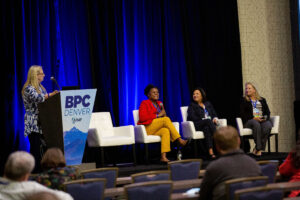
Davis-Howard offered her straightforward definition of a compliant proposal: “One that answers all the requirements in the solicitation as well as the evaluation criteria.”
Dufrene and Solli-Ziegler agreed and reiterated the importance of following all instructions, including formatting instructions. “The government is very particular,” they said.
Of course, we all wish compliance was that simple, which the panelists were quick to clarify. There are several moving parts to every proposal, and every one of those parts carries with it a chance that yours gets eliminated.
One of the panelists shared a story from early in her career in which she was eliminated from a bid because she didn’t use the correct font size in the headers and footers — a mistake you can bet she hasn’t made since. They also spoke of noncompliant covers, binders and CDs, assuring the attendees that every proposal veteran has at least one compliance-related horror story.
Other frequent issues the panelists have come across in their careers included forgetting to replace an old customer’s name with the new customer’s name when reusing material, failing to use the latest version of a graphic and surpassing the page limit.
As the discussion progressed, the panelists offered a wealth of additional compliance advice.
Do your homework. Read through the RFP three times to make sure you understand the requirements. There’s a lot to absorb in a complex RFP, and one read-through often doesn’t cut it.
Ask clarifying questions. Do the cover and table of contents count toward the page limit? When the customer wants copies of all contracts from the last five years, do they realize what they’re asking for? Is it better to provide only the relevant contracts? If the customer provides a PDF template, but the final submission must be a Word document, how’s that supposed to work? There’s only one way to find out: Ask clarifying questions. With all that’s at stake, don’t be shy about it.
Use the customer’s language. The panel shared a quote from one of their customers: “It’s not what you call it … it’s what the solicitation calls it. You need to step out of your own vernacular. … You may consider the gathering of test data to be data operations, but the solicitation does not.”
Use a compliance matrix. Create and refine a document that can be used as a checklist. Include proposal section numbers; page count requirements; other relevant requirements; a column to mark each section as fully compliant, partially compliant or noncompliant; and room for notes.
Designate a compliance reviewer. Everyone who touches the proposal should be checking for compliance, but it’s best to have one person who’s not involved in the creation of the proposal come in at the end and check for compliance.
The panelists began the session by handing out red pens to all the attendees. Throughout the discussion, they reminded the crowd that compliance isn’t always fun or easy, but it’s essential. The more we practice it and get processes in place, the less we’ll have to use those red pens.
This session took place at APMP’s annual Bid & Proposal Con. Save the date for next year’s conference, scheduled for May 22-25 in Dallas, Texas.
Dave Nelsen is a proposal writer and editor at Dragonfly Editorial.